The Biggest Mistake Organisations Make After Training
When organisations tell me they're not seeing the impact they hoped for from training, the conversation almost always starts in the same place.
People want to talk about the course itself.
Was it the right content? Was it engaging enough? Did people enjoy it? Was the trainer any good?
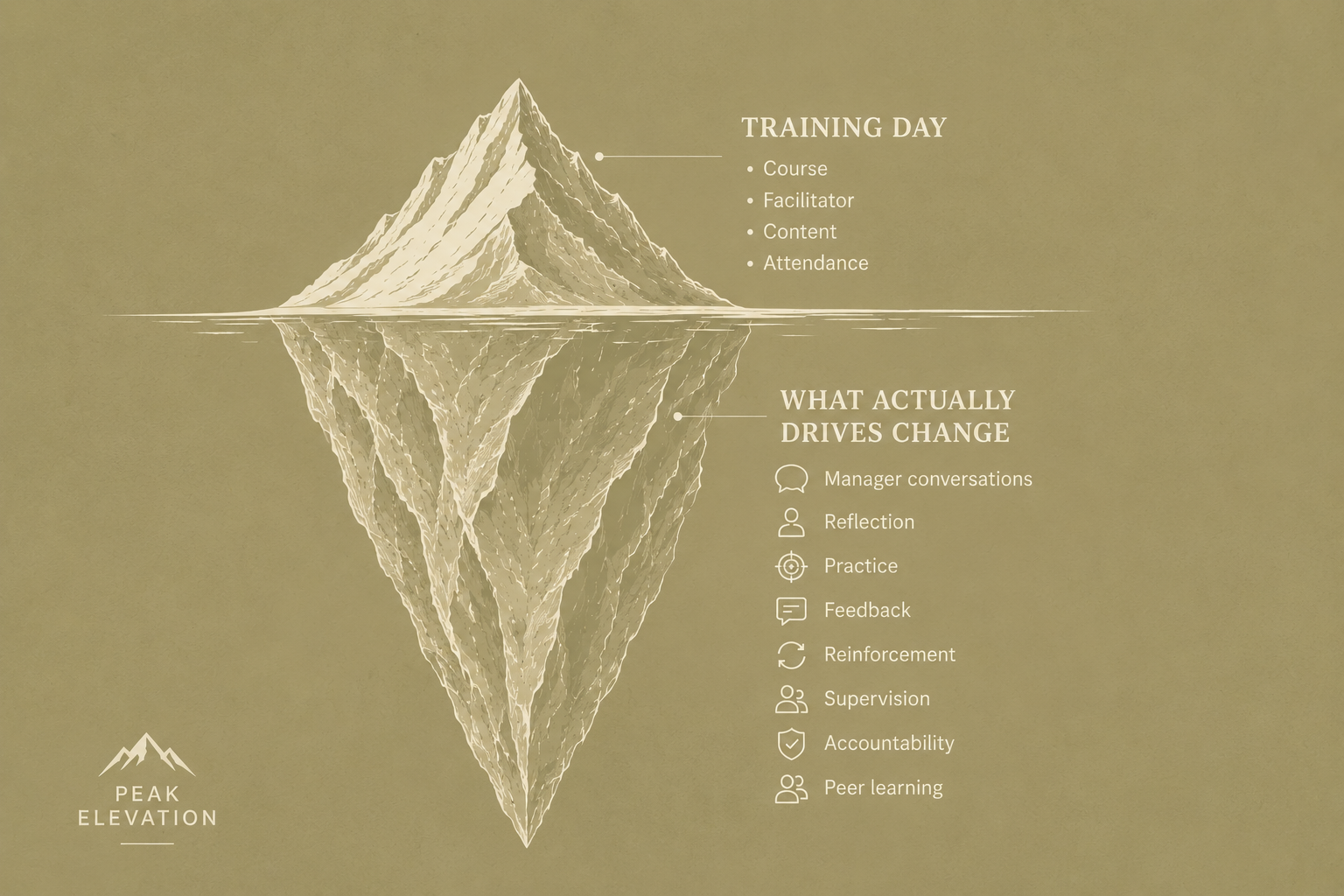
They're understandable questions, but over the years I've become less interested in what happened during the training and much more interested in what happened afterwards.
The reason is simple. I've seen excellent training fail to create meaningful change, and I've seen fairly ordinary training lead to significant improvements in practice. The difference is rarely the quality of the training alone. More often, it's what the organisation does once people leave the room.
What often gets overlooked is that training takes place in a carefully designed learning environment. Work does not.
In a training room, people have time to think. They can step back from their day-to-day responsibilities, reflect on their practice and consider different approaches. When they return to work, that protected space disappears. The learning now has to survive in an environment that may not have changed at all.
I've spoken to many staff over the years who could clearly explain what they had learned and why it mattered, yet still found themselves slipping back into familiar ways of working. Not because they disagreed with the learning, and certainly not because they lacked commitment, but because changing habits is difficult when the systems and environment around you continue to pull you towards what feels familiar.
This is where organisations often miss an opportunity.
If somebody attends training on having better conversations, improving record keeping or adopting a new approach to leadership, what happens next? Is there a conversation with their manager about how they plan to apply the learning? Are there opportunities to practise? Is there space to reflect on what is working and what feels challenging? Will anyone ask about it again in a month's time?
Too often, the answer is no.
Training becomes something people attend rather than something they continue to engage with. Once the course has finished, the responsibility for applying the learning sits entirely with the individual.
In my experience, that rarely produces the best results.
The organisations that seem to get the greatest value from learning and development take a different approach. They recognise that people need support to translate learning into practice and that this doesn't necessarily require complex systems or expensive programmes. Often it's the small things that make the difference.
A manager showing genuine interest in what someone learned. A team discussion about how a new idea might work in practice. Time set aside for reflection during supervision. Opportunities to share successes and challenges with colleagues.
Individually these things may seem insignificant, but together they create an environment where learning has a much better chance of becoming embedded.
I sometimes compare training to planting a seed. The training itself is important, but very few people would expect a seed to grow simply because it has been placed in the ground. Growth depends on everything that happens afterwards. The conditions matter. The attention matters. The ongoing support matters.
Learning works in much the same way.
The organisations that see the greatest impact from training aren't necessarily those delivering the most training. More often, they're the organisations that think carefully about how learning will be reinforced once people return to work. They understand that development isn't something that happens during a course. It's something that happens gradually through practice, reflection, feedback and experience.
When I look back at training programmes that have genuinely changed practice, I rarely remember the course itself as the deciding factor. What stands out is what happened in the weeks and months that followed. The conversations people had, the support they received and the opportunities they were given to put learning into action were usually far more influential than any slide deck or workbook.
That's why, when organisations tell me they want more impact from training, I'm rarely thinking about the training first.
I'm thinking about what happens next.